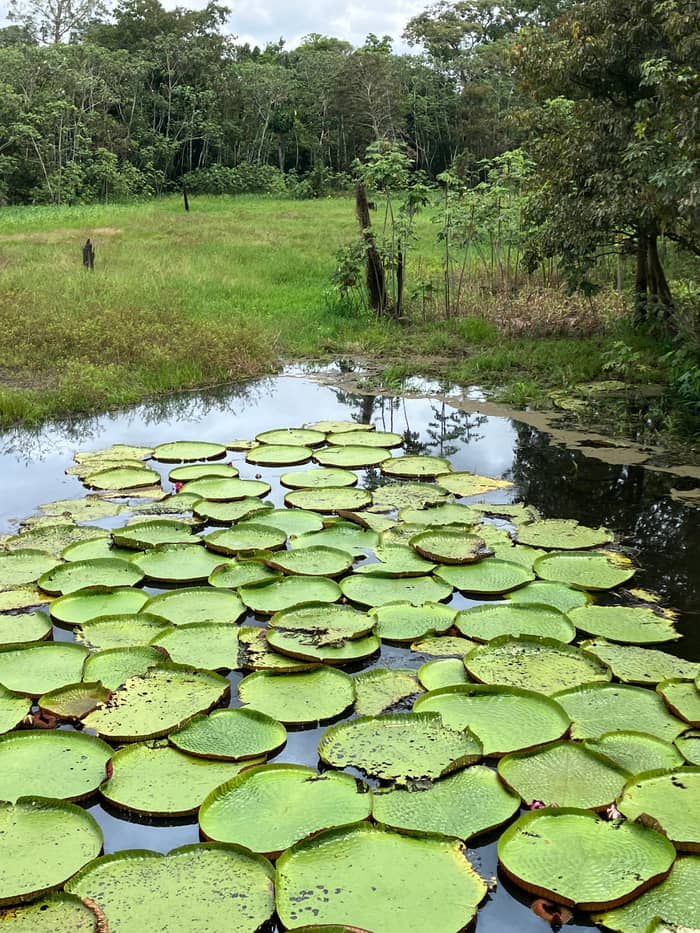
First visit
The full day
Boat, canoes, village, lunch
- Length1 day
- GuideIn English
- CancelFree to 24 hours
Guides
Language
Currency
See what is openfrom $55 · cancelling is freeInteractive tick list
The quick version
How dangerous is the Amazon River for a visitor? Less than the legends suggest: the real risks are mosquitoes, unsafe drinking water and city crime, and piranhas are far down the list.
The short list
Checklist · 12 points
Tap to check items off; your progress is remembered on this device.
0 / 12 ready
All ticked. Only the date and the number of travelers are left to choose.
Hold a seatThe river is less frightening than its legends and more demanding than a postcard. Here is what government health and travel advice says about piranhas, swimming, drinking water, mosquitoes and crime, and how to plan a river day around it.
Editorial team, amazonrivertour.quest · Updated November 12, 2026 · 8 mins to read
Overview
People who ask how dangerous the Amazon River is usually picture teeth and jaws, yet the official advice points somewhere else. Australia's Smartraveller calls insect-borne diseases a serious risk in Brazil and says yellow fever, dengue, malaria and Zika are common.6 Mosquito bites, in other words, matter more to your health on a river trip than any fish in the water, and they are the one danger you can prepare for weeks in advance with a doctor and a bottle of repellent.
The second risk is ordinary city crime around the trip rather than anything on the river. Canada advises a high degree of caution in Brazil because of high crime rates and gang-related violence in urban areas, and its list of high-crime cities includes Manaus.7,5 Australia gives the same level of caution because of violent crime.8 Neither warning is about boat days; both are about how you move around town.
The third risk is the water itself: what you drink, and where you swim. Governments advise sealed bottled water, no ice cubes and no swimming in fresh water in Brazil.3,9,2 Put together, the honest ranking for a visitor on a day trip from Manaus is mosquitoes and drinking water first, petty crime in town second, and the animals of the legend a distant last. None of this is a reason to skip the river; it is a reason to pack and plan like someone who knows which risks are real.
Governments compared
| Source | Main message | Relevant to the river day |
|---|---|---|
| Canada | High caution, crime in cities | Manaus is on the high-crime list; lodges were attacked on the river |
| Australia | High caution, violent crime | River travel on the Rio Negro is named in crime areas |
| US CDC | Malaria and yellow fever | All of Amazonas is a malaria area; vaccine advised |
| US Geological Survey | Piranha danger exaggerated | Care is needed with live fish |
As each government agency and the US Geological Survey publish their advice.5,22,8,23,4,11,20,21
The piranha is the fish everyone worries about, so the numbers are worth knowing before you board a boat. A Brazilian study of media reports counted 711 human cases in 10 years across the whole country, and 82.27% were mild single bites with only skin loss.1 Of those cases, 585 were minor single bites, and only 3 were serious, which the study puts at 0.68%, or 1 case in every 147.14,15,16
The bites cluster in time and place. Almost all reported accidents were single bites on the hands, legs and feet.12 Most happened in the reproductive season, which the authors read as males warning intruders away from their nest and offspring.17 The same paper says no scientific evidence proves the folklore of schools of piranhas attacking large animals and humans.18 The reputation, it suggests, grew out of scavenging, since these fish usually eat dead or injured animals.19
The US Geological Survey agrees that many experts consider the danger to humans greatly exaggerated.20 It still says considerable care must be taken in handling live piranhas, so let the guide unhook your catch.21 Caimans are the other animal visitors ask about; one evening listing sells an alligator watch alongside piranha fishing, and its packing list covers long trousers, sleeved shirts, repellent and flashlights.
Swimming is where official advice and tour marketing pull in different directions. Smartraveller's health notes for Brazil say to avoid swimming in fresh water.2 CDC lists wading or swimming in contaminated freshwater rivers and lakes as a schistosomiasis risk for the country, and swimming or wading in urine-contaminated fresh water as a leptospirosis risk.24,28 Those lines are about Brazil in general, not about a particular beach on the Rio Negro, but they set the cautious default.
What changes the picture is local knowledge. The level of the Rio Negro swings through the year, and NASA notes that the Rio Negro is widest in May, June and July, the flood season, when it climbs by several meters.29 At the extremes the river stood at 29.77 meters in the record flood and 13.63 meters in the record low at the port of Manaus.30,31 A sandbank that is a beach in one month is under the surface in another, which is exactly why a guide's instruction beats a generic rule.
So the practical advice is simple. Swim only where your guide says the spot is used for swimming, stay close to the boat, and skip the water after heavy rain, when CDC advises avoiding floodwater and muddy water.27 If a stop on your tour includes a swim, you are choosing it knowingly; if you prefer the official default of staying dry, you lose very little, because the lake, the canoes and the village are the point of the day.
Know what to do
Quick answers for the moments visitors actually meet on a river trip.
If A guide offers a swim in the river
Ask where and why it is used
Official advice is to avoid freshwater swimming by default.2,24
If I get a fever on the trip
See a doctor at once
CDC says to seek immediate medical attention, even up to a year later.13
If The drink comes with ice
Say no to the ice
Smartraveller advises avoiding ice cubes.9
If I will sleep outdoors or in a lodge
Use a screen or bed net
If Someone offers a cheap boat on the quay
Choose a licensed guided day
If Rain has swollen the river
Skip the water, keep the boat
CDC says to avoid floodwater and muddy water.27
Ways to be on the river
First visit
Boat, canoes, village, lunch
After dark
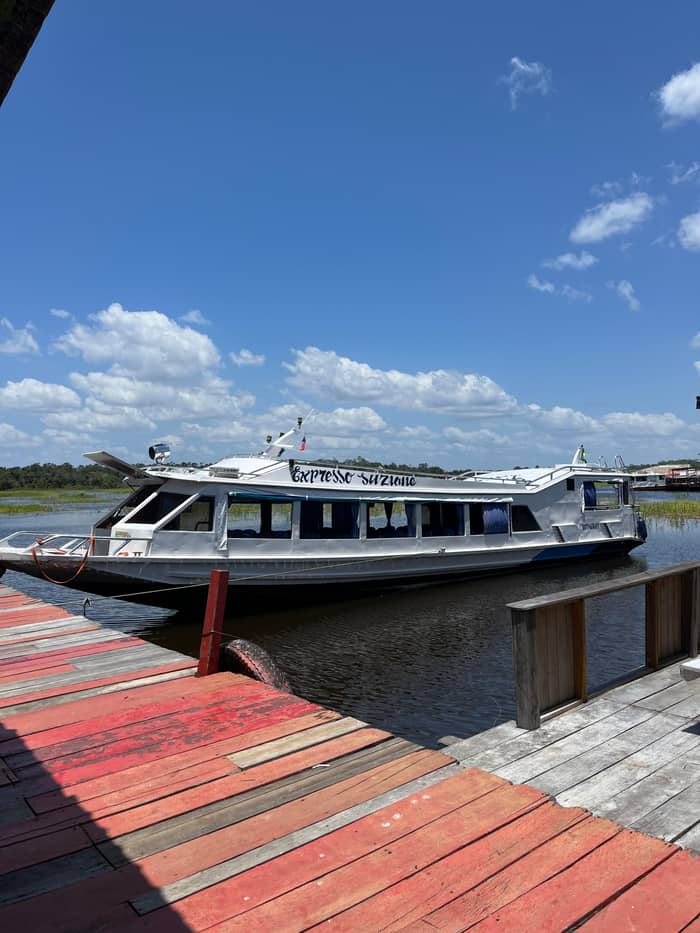
Fishing and alligator watch
Longer
Rio Negro, a canoe night
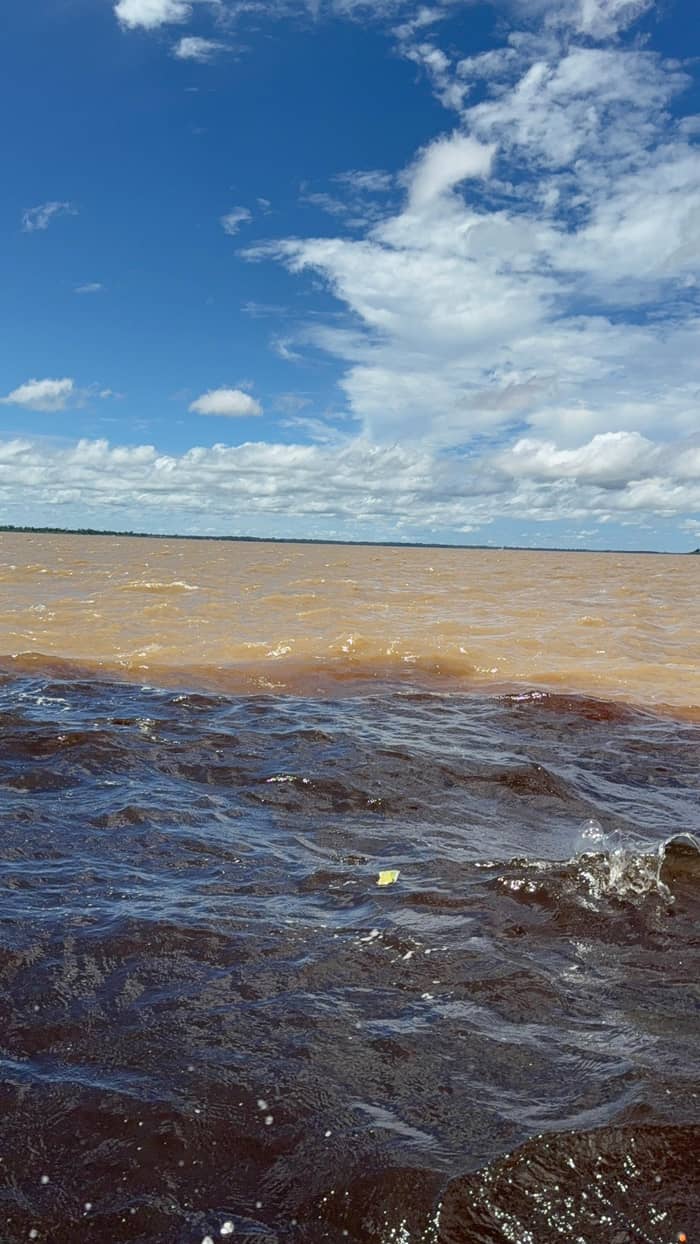
No, and the color of the water is no guide to its safety. The Rio Negro is nearly sediment-free and stained black-tea brown by decayed leaf and plant matter, while the Solimões carries a heavy load of Andean mud.37,38 A clear-looking arm of either river tells you nothing about what else is in it. The Amazon Cooperation Treaty Organization lists water pollution among the nine critical problems of the basin.39
Official advice for Brazil is to drink boiled water or bottled water with sealed lids, and to skip ice cubes, because the ice is made of the same tap water.3,9 On a river day that means carrying a sealed bottle from Manaus and checking the lid before you drink. The site's own day-tour listing includes a regional fish lunch, so ask your guide at the start which drinks come in sealed bottles and which do not.
Fruit juices, cold drinks poured from a jug and salads washed in tap water are the quiet routes by which untreated water reaches a visitor, so they deserve the same suspicion as the river itself. On a multi-day lodge stay, ask how the drinking water is treated before you rely on it. For a single day trip, sealed bottles and a sensible lunch are enough, and nobody will think you fussy for asking.
Plan with a guide
Pick the day, the evening or the night on the river and compare what a group would pay.
Look at 3 options
Pick the day, the evening or the night on the river and compare what a group would pay.
≈
View≈
View≈
ViewStarting prices as on the booking platform, converted at the ECB reference rate. You see the exact price at booking.
How the plan runs
Weeks before
Before booking
Many listings cancel free up to 24 hours ahead.
Night before
Repellent, raincoat, sunscreen and a sealed bottle.3
At the dock
Ask which stops include swimming and which do not.2
On the river
Piranha bites are mostly on hands, legs and feet.12
Back home
See a doctor for a fever up to a year later.13
This is the part of the plan that needs a doctor, not a guide. CDC recommends prescription medicine to prevent malaria for travelers going to certain areas of Brazil, and its list of transmission areas includes all areas of the state of Amazonas.32,4 The medicine has to be started days before the trip, so the conversation with a travel clinic belongs weeks ahead of your flight, and CDC adds that you should fill the prescription before leaving and take enough for the whole trip.10
CDC also recommends the yellow fever vaccine for travelers aged 9 months and over going to the state of Amazonas, although proof of vaccination is not required to enter Brazil.11,40 Smartraveller says the risk is highest in the wet season and where water stands still, including the Amazon.41 If you fall ill with a fever in a malaria-risk area, or up to 1 year after returning home, CDC says to seek immediate medical attention.13
The rest is bite prevention. On CDC's list the basics are covered arms and legs and a hat, plus a DEET repellent at a strength of 20% or above, which holds for several hours.33,34 Smartraveller adds that sunscreen goes on first and the repellent after.35 No vaccine covers dengue, Zika, leishmaniasis or Chagas disease, which all travel by insect, so repellent and clothing do the protecting.42
Video
Jumping Places on YouTube · Until you tap play, no video is loaded.
many experts consider its danger to humans to be greatly exaggerated and its reputation as a man-eater may be derived from scavenging on human corpses
Danger on the water from people is rare but is on the official radar. Canada says pirates have attacked lodges along the Amazon River and tells travelers to take appropriate precautions.22 Smartraveller lists river travel in the Amazon, particularly on the Itaquai, Japura and Rio Negro rivers and their tributaries, among the areas affected by drug-trafficking crime.23 Both warnings concern remote, unsupervised travel rather than a licensed day trip, but they explain why a reputable operator matters.
That is the practical reason to book a guided day with hotel pickup, as the site tour offers, instead of hiring a boat on the quay from a stranger. In Canada's summary, visitors to Brazil mostly lose belongings to theft, but violence cannot be ruled out.36 Leave valuables at the hotel, carry a waterproof pouch for the phone, and take only the cash you need for snacks and a craft purchase in the village.
Boats come with their own checklist. Ask to see the life jackets before leaving the dock, choose a canoe with a cover when the day looks wet, and remember that some listings state plainly that a canoe has no cover, which matters in a downpour or under a hot midday sun. An overnight stay raises the stakes a little: screened or air-conditioned rooms and a bed net are CDC's advice wherever the sleeping area is open to the outdoors.25,26
Most river days involve stepping from a dock into a boat, from a boat into a canoe and along a wooden walkway. Listings are candid about this. The Presidente Figueiredo waterfall day and the museum tower tour are both marked as not recommended for people with limited mobility, while the old city plus river boat day is wheelchair accessible and asks only that guests can get in and out of the car and boat.
If anyone in your group has a heart condition, is pregnant or is traveling with a small child, talk to a doctor before choosing a lodge: the yellow fever vaccine has an age floor of 9 months and malaria medicine has its own rules.11,32 Short day tours with an easy boat boarding are the gentle option, and a half day on the Rio Negro is listed as wheelchair accessible with pickup included.
Heat and sun do the quiet damage on a river day. The site tour's own list of things to bring is insect repellent, a raincoat and sunscreen, and an evening trip asks for covered legs and arms plus a flashlight. Add a sealed water bottle, a hat and shoes you can get wet, and the Amazon becomes what it is for most visitors: a long, hot, fascinating day on the water, with the cautions above as ordinary common sense.
FAQ
CDC lists all areas of the state of Amazonas among Brazil's malaria transmission areas.4
A DEET product of 20% or higher, says CDC, protects for several hours.34
Some listings are wheelchair accessible, and others are marked as not recommended for limited mobility.
Sources
Heading for the Amazon? Ask a real person here.